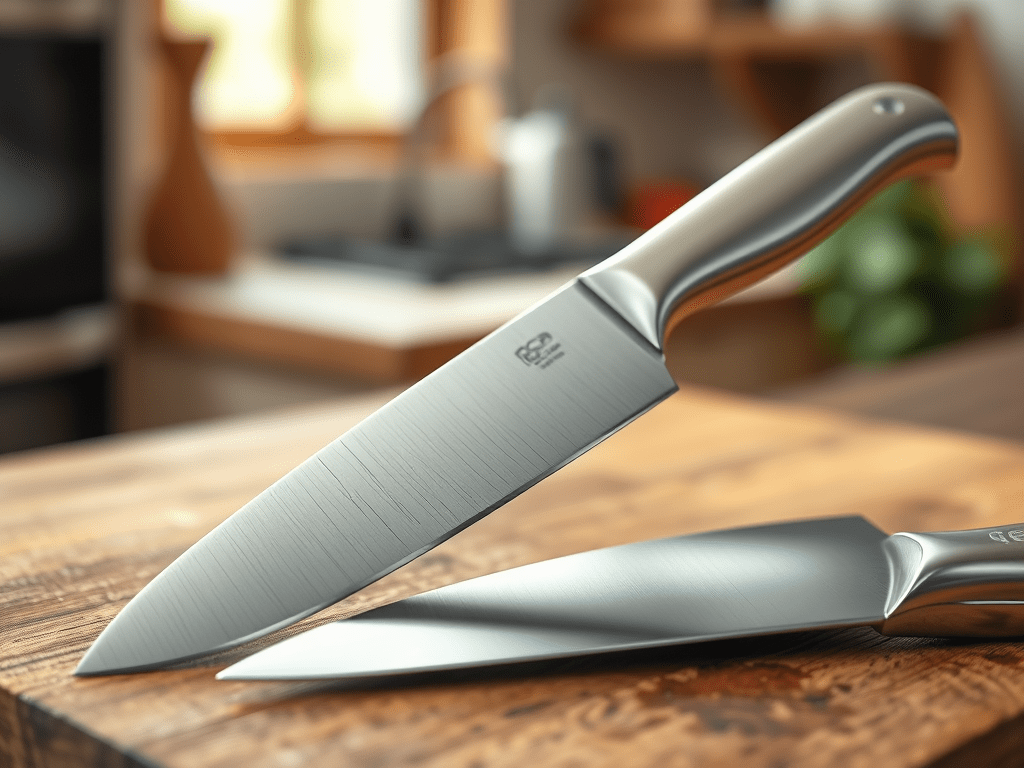
Think your knife choice is just about sharpness and durability? Think again. Every time you use a cheap, coated, or plastic-handled knife, you could be adding microplastics and toxic chemicals to your meals. The wrong knife doesn’t just dull over time—it could be contaminating your food in ways you never imagined.
The Hidden Dangers of Plastic and Coated Knives
Many mass-market knives come with plastic handles or non-stick coatings (like Teflon or ceramic coatings). These materials degrade with wear, releasing microscopic plastic particles or chemical residues into your food. Worse, once these coatings start to chip, they’re not just unsafe to use—they’re nearly impossible to clean properly.
The Best Knife Materials for a Plastic-Free Kitchen
If you want to keep microplastics off your plate, here’s what you should be using instead:
- Full Tang Stainless Steel Knives – Durable, rust-resistant, and free from synthetic coatings.
- Carbon Steel Knives – Razor-sharp and long-lasting, though they require more maintenance.
- Wood-Handled Knives – A solid alternative to plastic handles, as long as they’re untreated and high-quality.
- Titanium Knives – Ultra-light and corrosion-resistant, with no risk of plastic degradation.
The Worst Offenders: What to Avoid
- Plastic-handled knives – Cheap, easy to degrade, and full of hidden microplastics.
- Coated blades (Teflon, ceramic-coated steel) – Can chip over time, releasing chemicals into food.
- Disposable or low-quality knives – Dull quickly, forcing more sawing motion, which speeds up plastic degradation.



 The Longevity Edit
Leave a comment