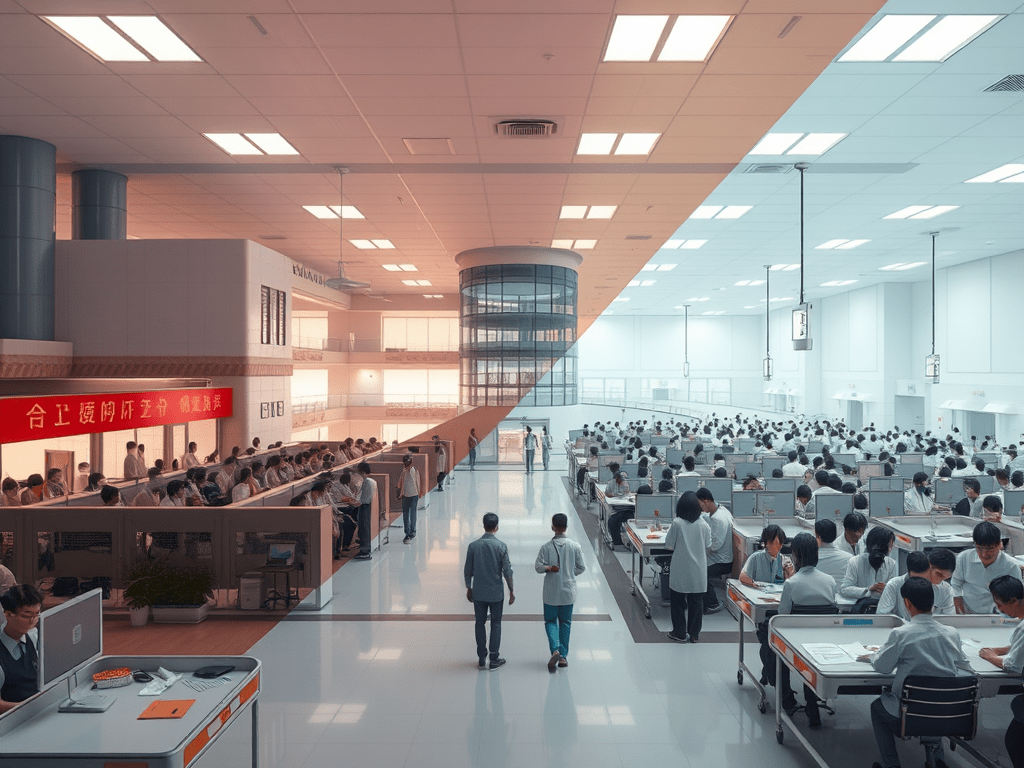
China’s rise as a global superpower is undeniable, but when it comes to healthcare, is the system as strong as its economy? While China has made impressive strides in medical technology and public health, deep-rooted challenges—overcrowding, doctor shortages, and rural-urban disparities—paint a more complicated picture.
The Strengths: A Tech-Driven Health Boom
China has invested billions into AI-driven healthcare, robotic surgeries, and world-class hospitals in major cities like Beijing and Shanghai. The country has also aggressively expanded universal health coverage, with over 95% of its population having some form of insurance. On the surface, it looks like a public health success story.
The Cracks Beneath the Surface
But here’s the reality:
- Overcrowded hospitals: Top-tier hospitals in major cities are overwhelmed, forcing many to wait hours or even days for basic care.
- Doctor shortages: China has far fewer doctors per capita than most developed nations, with many overworked and underpaid.
- Rural vs. Urban Divide: While the wealthy get cutting-edge treatment in megacities, rural populations struggle with limited access, outdated equipment, and understaffed clinics.
The Elephant in the Room: Corruption and “Red Envelopes”
China’s healthcare system also suffers from deep corruption, where “red envelopes” (bribes) are often expected to get better treatment. Patients in lower-income brackets either pay up or suffer from inadequate care—a stark contrast to the country’s rapid modernization in other sectors.



 The Longevity Edit
Leave a comment